
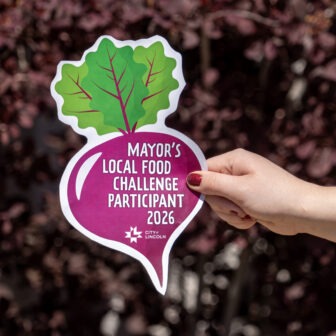
The City of Lincoln (lincoln.ne.gov) reminds food producers, restaurants and others to join the Mayor’s Local Food Challenge, a program that encourages community organizations to source food from local producers.
The challenge, which runs July 1 through October 31, celebrates businesses, schools, restaurants and others that meet food sourcing commitment levels. Organizations are encouraged to find out more and register at lincoln.ne.gov/foodchallenge.
In the program’s first year in 2025, 21 organizations placed 289 orders with 38 regional farmers and suppliers, spending $595,009 on local food products. Participants in the program included Hudl, Duncan Aviation, Lincoln Public Schools, Bryan Health, Open Harvest Co-op Grocery, Hub Cafe, Belmont Community Center, and Matt Talbot Kitchen & Outreach.
The City works with Lone Tree Foods of Lincoln and Robinette Farms of Martell to connect challenge participants with high-quality food produced within a 250-mile radius of Lincoln. Participants choose program options that suit their needs and earn recognition based on the number of local food orders placed during the 18-week program. Organizations placing two orders or more receive a Mayor’s Local Food Challenge window cling to indicate their participation.
At the end of the challenge, participants are recognized and celebrated for their commitment to sourcing local food. The commitment levels are based on the number of local food orders placed during the 18-week program:
- Platinum – 18 orders
- Gold – 17 to 13 orders
- Silver – 12 to 7 orders
- Bronze – 6 to 2 orders
Methods organizations can participate in the challenge include:
- Workplace Wellness and Food Programming: Employees can pick up local food subscription boxes at their workplaces.
- Wholesale to Employee Cafeteria/Special Events: Accounts can be created to begin regular delivery of local food to
cafeterias or special events. - Wholesale to Restaurants: Those in the food service industry may shop online or receive emails, texts, or calls from sales teams.
- Farm to School: Schools may use resources like the Harvest of the Month curriculum or highlight a local producer each month
to incorporate local food into school meals. - Custom: Collaborative producer networks can build a custom solution tailored to an institution’s needs and goals.
Kim Morrow, Chief Sustainability Officer, said Lincolnites spend $1.1 billion each year on food sourced from outside its region, according to the Lincoln Metro, Nebraska Local Farm and Food Economy report. Increased access to fresh, nutritious food improves public health, leading to healthier communities, she said.
“If every Lincoln metro resident spent $5 a week on local food, or had spent for them, it would generate $91 million annually for regional farms,” Morrow said. “Local food is fresher, tastier, and helps businesses and institutions connect with regional farmers. Buying local keeps money in our community, creates jobs and boosts the local economy. It also reduces transportation emissions while promoting sustainable agriculture.”
Morrow added that though the Mayor’s Local Food Challenge is meant to recognize organizations, individuals still have an important role to play. She encouraged community members to participate in the following ways:
- Ask your workplace or favorite restaurant or coffeeshop to participate in the challenge.
- Celebrate businesses participating in the challenge by supporting them financially or giving them words of encouragement. The challenge’s window cling displayed at participating businesses makes it easy to identify who is involved.
For more information or to register for the Mayor’s Local FoodChallenge, visit lincoln.ne.gov/foodchallenge.